Home >
Hot Products >
OEM Smedic Premium Anionic Polyacrylamide APAM Flocculant - Eco-Friendly China Suppliers & Factory for Wastewater Treatment Manufacturer, Exporters
1 / 3
OEM Smedic Premium Anionic Polyacrylamide APAM Flocculant - Eco-Friendly China Suppliers & Factory for Wastewater Treatment Manufacturer, Exporters
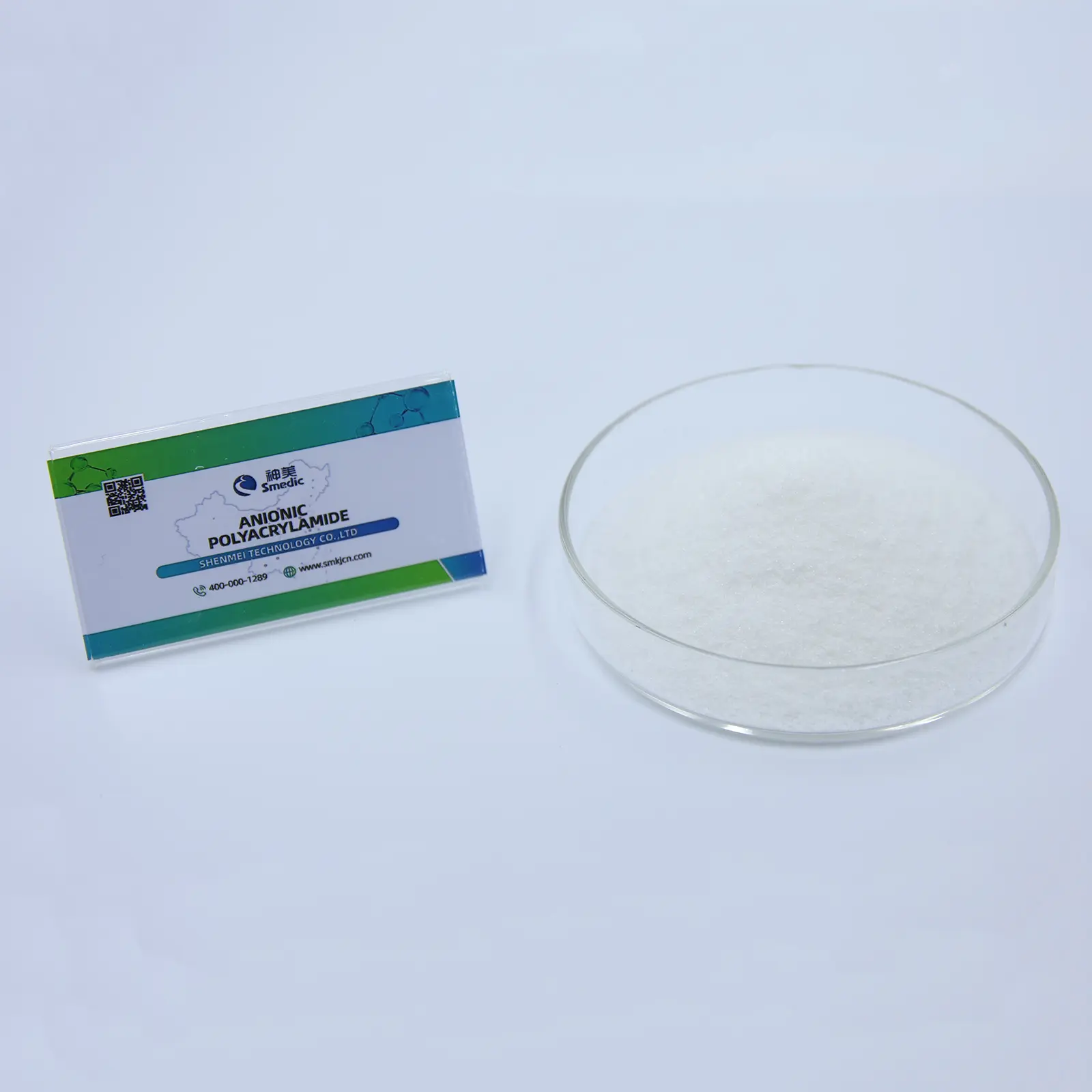
Anionic Polyacrylamide (APAM, CAS 9003-05-is a high-molecular-weight, water-soluble polymer ideal for industrial wastewater treatment and enhanced oil recovery. This linear-chain structure significantly increases viscosity, improving oil displacement and extraction in petroleum applications. As a powerful flocculant and coagulant, APAM facilitates rapid sedimentation and effectively removes turbidity, color, and oil from industrial effluents. Sourced from reliable suppliers in China, our APAM is available in both powder and liquid forms, including solutions and emulsions. This non-toxic and eco-friendly product resists toxic monomer decomposition, making it a sustainable choice for businesses. Trust our factory to deliver high-quality Anionic Polyacrylamide tailored to your needs
Its versatility extends to applications in papermaking, mining, and textile industries, where it enhances process efficiency and product quality. APAM's strong coagulant properties make it ideal for treating complex wastewater streams, including those from chemical manufacturing and municipal treatment plants. Its adaptability to a wide range of pH levels, temperatures, and water chemistries ensures reliable performance in diverse conditions. The polymer's high molecular weight and customizable ionic charge allow tailored solutions for specific industrial needs, optimizing flocculation and sedimentation processes.
APAM's environmentally safe profile supports compliance with regulatory standards, minimizing ecological impact. Its low dosage requirements reduce chemical consumption, making it a cost-effective choice for large-scale operations. The polymer's ability to form strong hydrogen bonds with water molecules enhances its water-absorbing capacity, making it suitable for applications like gel electrophoresis and super-absorbent materials. By improving water clarity and reducing contaminants, APAM contributes to sustainable water management practices. Its robust performance in high-salinity and high-turbidity environments makes it a preferred choice for industries seeking efficient and eco-friendly wastewater treatment solutions, delivering consistent results and operational reliability across diverse applications.
PAM is a synthetic chemical that can be tailored to fit a broad range of applications:
– Cationic Polyacrylamide – CPAM
– Anionic Polyacrylamide – APAM
– Nonionic Polyacrylamide – NPAM
Item
Molecular Weight
Solid Content
Hydrolysis Degree
APAM
5–22 million
≥88%
10–50%
NPAM
8–12 million
≥88%
0–5%
CPAM
≥1.0 million
≥88%
5–60%
★ High performance, high molecular weight anionic polyacrylamide — Excellent for use in wastewater and effluent treatment.
Features
Strong coagulant agent
Environmentally friendly
Non-decomposable in nature (into toxic monomers)
No poisoning or side effects
Variety of characteristics and chemical and physical behaviors
Frequently Asked Questions
What is Anionic Polyacrylamide (APAM) and what is its CAS number?
Anionic Polyacrylamide (APAM) is a high-molecular-weight synthetic polymer derived from acrylamide monomers. Also known as Acrylamide Homopolymer or Propenamide Homopolymer, its CAS number is 9003-05-8. It carries a negative ionic charge and is widely used as a flocculant and coagulant in water treatment and industrial processes.
What are the main applications of APAM Polyacrylamide?
APAM is primarily used in municipal and industrial wastewater treatment, papermaking, mining, and textile industries. It is effective in treating complex wastewater streams from chemical manufacturing plants, improving water clarity, and reducing suspended solids. It is also used in gel electrophoresis and super-absorbent material applications.
What is the difference between APAM, CPAM, and NPAM?
The three main types of polyacrylamide differ by ionic charge: APAM (Anionic) carries a negative charge with a molecular weight of 5–22 million and a hydrolysis degree of 10–50%; CPAM (Cationic) carries a positive charge with a molecular weight of ≥1.0 million and a hydrolysis degree of 5–60%; NPAM (Nonionic) is neutral with a molecular weight of 8–12 million and a hydrolysis degree of 0–5%. Each type is selected based on the specific characteristics of the wastewater being treated.
Is APAM Polyacrylamide environmentally safe?
Yes. APAM has an environmentally safe profile and supports compliance with regulatory standards, minimizing ecological impact. It is non-decomposable into toxic monomers under normal conditions, has no poisoning or side effects, and its low dosage requirements help reduce overall chemical consumption in large-scale operations. It holds ISO, SGS, and CE certifications.
What are the key physical specifications of APAM?
APAM appears as white to faintly yellow granules in solid form, with a solid content of 90% minimum, a granule size of 20–100 mesh, and a dissolution time of approximately 60 minutes. Its high molecular weight (5–22 million) and adjustable ionic charge make it suitable for a wide range of pH levels, temperatures, and water chemistry conditions.
Can APAM perform well in high-salinity or high-turbidity water conditions?
Yes. APAM demonstrates robust performance in both high-salinity and high-turbidity environments. Its adaptability to diverse water chemistries, combined with its strong flocculation and sedimentation properties, makes it a preferred choice for industries that deal with challenging water quality conditions, delivering consistent and reliable results across a wide variety of applications.
 Smedic Tech