ODM Phosphoric Acid Solution Suppliers & Exporters

Industrial-Grade Technical Briefing & Global Procurement Guide for High-Concentration Chemical Engineering, Eco-Friendly Scaling Control, and Industrial Optimization

Understanding Phosphoric Acid Solutions (H₃PO₄)

Phosphoric acid ($H_3PO_4$), chemically known as orthophosphoric acid, represents one of the most vital triprotic mineral acids utilized across modern chemistry. In industrial supply chains, it is primarily manufactured, exported, and formulated as an aqueous solution, with concentrations ranging from 75% to 85% for standard applications, and up to 99% for high-purity crystalline grades.
As a non-volatile, moderately strong acid, Phosphoric Acid Solution serves dual properties: it is a robust pH regulator and an effective chemical intermediate. Unlike volatile options such as hydrochloric or nitric acids, it presents lower corrosive vapor hazards, making it highly favored in closed-loop systems, municipal water management, metal pickling, and electronics fabrication.

Typical Specifications & Concentration Profiles:

  • Industrial Grade (75%, 81%, 85%): Widely utilized in wastewater treatment plant clarification, metal phosphatizing, agricultural liquid fertilizer formulation, and complex building-block chemical syntheses.
  • Food & Beverage Grade (85%): Extensively deployed as an acidulant, yeast nutrient, and pH adjuster in carbonated soft drinks, dairy processing, and food-grade fermentation operations.
  • Electronic Grade (99%+): Extremely low parts-per-billion (ppb) metallic impurity profiles, essential for semiconductor gate cleaning and wafer etching.

Smedic Technology Co., Ltd. - Corporate Infrastructure

Bridging scientific innovations with massive industrial-scale manufacturing

2011
Year Established
80+
Environmental Protection Agents
1M+
Annual Tons Capacity
20M+
Daily Treated Tons (Sewage)

Company Profile & Network

Established in 2011, Smedic Technology Co., Ltd. has evolved into a preeminent, comprehensive environmental protection and chemical solution provider. We seamlessly integrate advanced research & development, state-of-the-art production matrices, and comprehensive technical field services.

Headquartered in Beijing, Smedic maintains direct control over wholly-owned production bases situated in Hebei, Guizhou, Shanxi, and other resource-rich areas. Guizhou, specifically, provides an exceptional geographical and supply-chain advantage for raw phosphate rock processing, ensuring highly competitive, integrated raw-material pathways for our phosphoric acid-based environmental agents.

Layout, Scale, & Engineering Operations

Our localized network is supported by over 10 strategically placed OEM partner factories and regional warehousing centers across Shandong, Anhui, Guangxi, and Sichuan provinces. This expansive logistics net guarantees consistent lead times and low transit costs for bulk fluid deliveries.

Presently, Smedic coordinates operations spanning more than 20 provinces across China, providing tailored water-treatment compounds, scale inhibitors, defoamers, and biological nutrients to over 600 municipal sewage treatment installations and upwards of 1,000 global industrial manufacturing giants.

China Factory Advantages for Phosphoric Acid Solutions

How integrated supply chains and natural resource availability ensure global procurement dominance

Abundant Mineral Feedstocks

China hosts some of the world's largest high-grade phosphate rock reserves. Our strategically situated production plant in Guizhou taps directly into this resource layer, bypassing multi-tiered distributor margins. This geographic alignment provides our global partners with long-term cost stability and secure supply streams, even during global chemical market volatility.

Advanced Synthesizing Technology

Leveraging dual synthesis routes (wet-process purification and thermal-process oxidation), Smedic's production assets feature computerized DCS automation control. We meticulously remove heavy metals (such as arsenic, lead, and cadmium) and fluorine contaminants, producing ultra-pure phosphoric acid solutions that consistently pass rigorous food-grade and electronics-grade standards.

Optimized Global Logistics

Transporting high-concentration liquid acids demands certified chemical freight logistics. Smedic operates dedicated, ISO-tank and IBC-tote filling stations with immediate access to China's major deepwater marine terminals. Our logistics experts manage international maritime hazardous cargo compliance, ensuring damage-free delivery.

Elite Qualifications & R&D Mastery

Smedic has been officially recognized as a Chinese National High-Tech Enterprise, a National Specialized, Refined, Unique and Innovative "Little Giant" Enterprise, and a Hebei Province Green Factory. These honors validate our strict adherence to international environmental protocols, minimized carbon emissions, and resource-efficient manufacturing.

Our technology infrastructure is supported by an expert framework of academicians, senior chemical engineers, and professors, working across one academy, three research institutes, and five production bases. We have established joint research laboratories with Tsinghua University Association of Senior Scientists and Technicians, Shandong University, and Beijing University of Technology to continuously advance water-purification chemical technologies.

Furthermore, Smedic acts as a key industrialization partner for academic research originating from Peking University and Tianjin University, transforming patent concepts into scaled chemical processes.

Scientific Recognition & Patents

Our intellectual property portfolio includes over 60 Chinese patents, featuring 40+ invention patents and 20+ utility model patents. We have spearheaded the drafting of over 10 national and industry standards for chemical carbon sources, composite coagulants, and bacterial agents.

22nd China Patent Award
Won for our "Inorganic-Organic Covalent Bond Flocculant and Advanced Water Purification Technology."
First Prize for Technological Invention
Awarded by the China Petrochemical Industry Association for innovations in polymer and acidic scaling control.
Belt and Road SME Recommended Project
Recognized for exporting sustainable chemical innovations to emerging infrastructure sectors globally.

Macro Industrial Solutions & Application Scenarios

Precision performance in water treatment, agriculture, metal passivating, and food processing

1. Biological Nutrient Feed in Wastewater Treatment

In biological wastewater treatment plants (WWTPs), microorganisms require balanced inputs of carbon, nitrogen, and phosphorus (typically in a C:N:P ratio of 100:5:1) to support active biomass growth. Phosphoric acid solutions serve as an easily metabolizable, highly bioavailable phosphorus source. In systems treating carbon-rich but phosphorus-deficient industrial wastewater (such as pulp and paper or food processing effluents), adding controlled doses of H₃PO₄ prevents sludge bulking and maintains efficient chemical oxygen demand (COD) removal.

2. Metal Passivation, Etching, & Pickling Solutions

Phosphoric acid is highly effective in metal finishing. It reacts with steel or iron components to form a thin, insoluble layer of iron phosphate ($FePO_4$). This chemical conversion coating passivates the metal substrate, offering excellent rust protection and creating a high-adhesion surface for subsequent painting or powder coating. Additionally, it serves as a key component in chemical polishing baths for aluminum and stainless steel alloys.

3. High-Efficiency Agricultural Fertigation

In modern drip irrigation and hydroponic farming, phosphoric acid serves a dual purpose. It provides a direct, highly concentrated supply of orthophosphorus, essential for robust crop root development and flowering. Simultaneously, its acidic properties keep drip lines clean by dissolving alkaline calcium carbonate and magnesium salt deposits that build up inside emitters, preventing system clogging.

Advanced ODM Scale Inhibitors & Corrosion Passivators

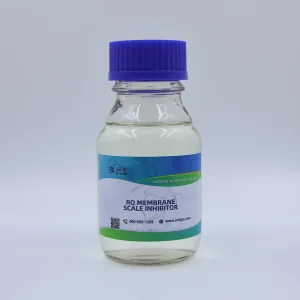
Phosphoric acid derivatives (specifically organophosphonates such as HEDP, ATMP, and PBTC) serve as the chemical foundation for industrial cooling towers and reverse osmosis (RO) membrane scale inhibitors. By coordinating with divalent scale-forming cations ($Ca^{2+}$, $Mg^{2+}$), these formulations prevent crystalline scale deposition on critical heat-transfer surfaces.

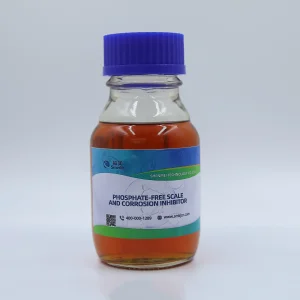
For facilities transitioning to green operations, Smedic provides advanced phosphate-free scale and corrosion inhibitors. These biodegradable formulations prevent scaling and mineral deposition without contributing to phosphorus loading in discharged wastewater, helping plants comply with stringent environmental standards.

Global Sourcing Requirements & Quality Management

Evaluating suppliers through chemical compliance, packaging safety, and quality-assurance systems

1. Strict Regulatory Compliance & Chemical Safety

Phosphoric acid is classified under UN 1805 (Liquid Phosphoric Acid) Class 8 Corrosive substances. Global buyers must partner with suppliers that comply with international safety frameworks, including:

  • EU REACH Registration: Required for seamless imports into European Union countries.
  • GHS Compliance: Compliant Safety Data Sheets (SDS) and labeling protocols.
  • NSF/ANSI Standard 60: Necessary for chemicals used in drinking water treatment systems.
  • ISO 9001, 14001, & 45001: Validates quality management, environmental safety, and occupational health systems.

2. Specialized Industrial Packaging Options

To preserve product purity and ensure safe transit across long ocean voyages, Smedic offers versatile, heavy-duty packaging configurations:

  • IBC Totes (1000L): High-density polyethylene (HDPE) containers enclosed in steel cages, optimized for space efficiency and forklift handling.
  • 35kg / 330kg HDPE Drums: Ideal for mid-sized manufacturing facilities and dosing systems.
  • Bulk ISO Tanks (20,000L+): Designed for large-scale chemical distributors and high-volume industrial plants.

Future Trends in Phosphoric Acid Production & Water Treatment

The global phosphoric acid sector is experiencing a major shift toward sustainable processes. Driven by strict environmental regulations and high energy costs, chemical companies are adopting cleaner, lower-carbon technologies. Smedic is leading this transition by implementing advanced, low-emission Wet Process Phosphoric Acid (WPA) purification, which significantly reduces the energy footprint compared to traditional thermal manufacturing routes.
Furthermore, circular economy initiatives are driving the development of phosphorus recovery systems. Regenerating orthophosphate from waste streams helps industrial operations reuse this valuable mineral, minimizing runoff into delicate aquatic ecosystems and preventing eutrophication.

Industry & Technical FAQ

Expert answers to common queries regarding chemistry, handling, and sourcing

Q1: What is the differences between Wet-Process and Thermal-Process Phosphoric Acid?
Wet-process phosphoric acid is produced by reacting sulfuric acid with naturally occurring phosphate rock. This method yields a cost-effective product primarily used in agricultural fertilizers and industrial water treatment. Thermal-process phosphoric acid is synthesized by burning elemental phosphorus in air and dissolving the resulting phosphorus pentoxide ($P_2O_5$) in water. This route yields a higher-purity product, ideal for food-grade formulations and electronics etching, though at a higher energy cost.
Q2: How does temperature affect the stability and viscosity of high-concentration phosphoric acid?
High-concentration phosphoric acid solutions (particularly 85% grades) become significantly more viscous at colder temperatures. Standard 85% acid has a freezing point of approximately 21.1°C (70°F). If exposed to lower temperatures during transport or storage, it may crystallize. Diluting the solution to 75% drops the freezing point to -17.5°C (0.5°F), making it much easier to handle in cold-weather industrial operations.
Q3: Why is phosphoric acid preferred over sulfuric acid for pH adjustment in certain wastewater plants?
While sulfuric acid is often cheaper, phosphoric acid is selected when the wastewater treatment system also requires a biological phosphorus source (such as in activated sludge processes). Additionally, sulfuric acid can react with calcium ions to form insoluble calcium sulfate ($CaSO_4$) scale, which clogs pipes and fouls membranes. Phosphoric acid provides a safer, more stable pH buffer without producing heavy sulfate precipitation.
Q4: What quality control protocols does Smedic follow to ensure food-grade safety compliance?
Our food-grade phosphoric acid is produced using high-purity thermal raw materials and undergoes secondary purification to remove trace heavy metals. Every batch is analyzed via ICP-MS to confirm that arsenic, fluorine, and lead levels remain well below the limits defined by the Food Chemicals Codex (FCC) and European Food Safety Authority (EFSA) regulations.
Q5: Can Smedic customize phosphoric acid solution formulations for specific industrial applications?
Yes. Through our ODM program, Smedic can blend phosphoric acid with specialized organic scale inhibitors, defoamers, or metal passivators to meet custom client specifications. We also adjust concentrations and package the final products in branded drums, IBC tanks, or bulk vessels.