As South America's prominent industrial force, Argentina stands at the intersection of surging mineral extraction (particularly within the Lithium Triangle) and strict environmental stewardship mandates like the National Environmental Framework Law (Ley 25.675).
The industrial corridors of Buenos Aires, Santa Fe, and Córdoba, alongside the intensive mining sectors of Catamarca, Salta, and Jujuy, are subject to stringent regional effluent disposal laws. Key metallic pollutants such as hexavalent chromium (Cr VI) from historical tannery complexes in the Matanza-Riachuelo basin, copper (Cu) and lead (Pb) from electroplating facilities, and heavy metallurgical leachates pose critical operational challenges.
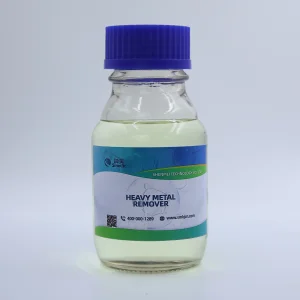
Traditional chemical precipitation techniques often fall short when dealing with chelated or complexed metallic ions. Our advanced polymeric dithiocarbamate (DTC) and organosulfur heavy metal removal agents are specifically designed to penetrate complexing matrices, precipitating target toxic ions down to sub-parts-per-billion (ppb) concentrations, ensuring total compliance with provincial water codes and national guidelines.
The Federal Council of the Environment (COFEMA) establishes guidelines, but individual provinces enforce specific limits:
Unlike standard sodium hydroxide or calcium oxide precipitation, which is heavily pH-dependent and fails to handle organic-complexed metals (e.g., EDTA, citric acid, or ammonia complexes), Smedic heavy metal removal agents employ macromolecular ionic capturing systems.
The agent structure contains a high density of active polar sulfur-donor groups. These coordinate with heavy metal ions, displacing weaker oxygen or nitrogen based ligands from existing metal complexes.
Once target metals (Cu2+, Ni2+, Pb2+, Zn2+, Cd2+) bind with the polymer, the hydrophilic parts of the molecule are neutralized. The resulting polymer-metal crosslinked chains rapidly transition into a dense, insoluble sludge.
The agent acts as both precipitant and flocculant core. When combined with inorganic coagulants (like PAC or PFS), it yields thick, fast-settling flocs that reduce required polymer doses and filtration times.
| Metallic Pollutant | Initial Conc. (ppm) | NaOH Treatment Result (ppm) | Smedic Agent Result (ppm) | Argentina Target Thresholds |
|---|---|---|---|---|
| Copper (Cu2+) | 50.0 | 1.8 (fails in chelated matrices) | < 0.05 | < 1.0 (typical regional limits) |
| Nickel (Ni2+) | 35.0 | 2.5 (residual complexing remains) | < 0.02 | < 2.0 |
| Lead (Pb2+) | 10.0 | 0.8 (amphoteric dissolution at high pH) | < 0.01 | < 0.2 |
| Cadmium (Cd2+) | 5.0 | 0.35 (insufficient at fluctuating pH) | < 0.005 | < 0.05 |
Purchasing directly from an established high-capacity manufacturer like Smedic ensures chemical consistency, volume stability, and cost protection.
Our multiple production bases in Hebei, Guizhou, and Shanxi, alongside partnered logistics hubs, guarantee that large-scale industrial orders destined for Argentine ports (Buenos Aires, Rosario) are processed and dispatched on time.
Different industrial sites present unique mineral mixtures. Our joint research initiatives with Peking University and Tsinghua University experts allow us to design target chelating properties based on the mineral characteristics of Salta or Jujuy.
Every batch undergoes strict inspection before release. Raw materials are audited, and finished solutions are analyzed via ICP-OES to confirm active ingredient consistency. This reduces downstream dosage variation at customer wastewater treatment plants.
Direct purchasing eliminates intermediary fees. For Argentine municipal water systems and mining conglomerates, Smedic offers customized contractual procurement programs to shield budgets from global raw material fluctuations.
Brine purification requires precise mineral separation. Smedic heavy metal removal agents are combined with high-grade RO scale inhibitors to process concentration waters, recovering precious lithium compounds while mitigating toxic trace element runoff in surrounding basins.
Historical leather processing zones produce high levels of complexed trivalent and hexavalent chromium. Our chelating agents isolate chromium ions, reducing them to stable precipitates that can be easily filtered out, keeping discharges well below ADA standards.
Surface finishing plants generate rinse wastewater containing complexed copper, nickel, and zinc. Smedic agents break chemical complexes to precipitate these metals, allowing facilities to recirculate cleaning water safely.
Smedic Technology founded in Beijing. Commenced research into municipal sewage treatment chemicals and advanced water purification agents.
Recognized as a national high-tech enterprise. Expanded research focus to specialized industrial wastewater and complex heavy metal removal agents.
Completed major expansions across Hebei, Shandong, and Guizhou production bases. Combined annual production capacity exceeded 1 million tons.
Established a dedicated provincial R&D platform in Hebei. Launched joint laboratories with academic institutes for target molecule synthesis.
Formed strategic joint venture for advanced mineral processing and tailing treatment reagents, expanding global supply networks to South America.
Effective removal of heavy metals from industrial effluent is rarely accomplished by a single chemical step. Best-in-class operations combine multiple processes for optimal results.
Adjusting effluent pH using sodium hydroxide or lime helps precipitate bulk metals as hydroxides. This primary precipitation step reduces the overall loading of heavy metals before the chelator is introduced.
After adding the chelating agent to bind complexed metals, polyacrylamide (PAM) is dosed to bridge the micro-flocs. This step increases particle size and speeds up sedimentation in clarifiers or DAF units.
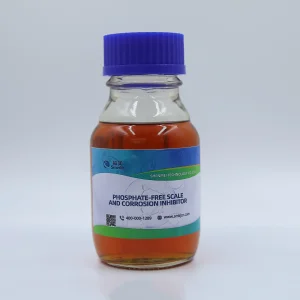
In zero-liquid-discharge (ZLD) systems, reverse osmosis processes the treated supernatant. Using specialized scale inhibitors protects RO membranes from mineral precipitation and fouling, extending system life.
The generated metal-copolymer flocs are pressed into cakes using plate-and-frame filter presses. The high stability of the metal-chelator bonds prevents leaching during disposal, ensuring compliance with local solid waste regulations.
Our agent uses high-affinity sulfur-donor groups that form stronger bonds with target metal ions than EDTA. This thermodynamics-driven displacement frees the metal from the organic complex, allowing it to precipitate.
While standard hydroxide precipitation requires strict pH ranges, Smedic organosulfur precipitants operate effectively across a broad pH span from 3.0 to 12.0, minimizing the need for constant chemical adjustments.
The covalent bonds formed are highly stable under environmental conditions. The resulting sludge passes standard leaching tests, allowing for safe disposal under typical solid waste regulations.
Yes. Our R&D center can adjust chelating molecular weights and functional group densities to match water samples from specific sites, ensuring optimal performance for local operations.
Standard manufacturing and port delivery in China takes 14 to 21 days. Ocean transit to Buenos Aires or Rosario typically adds 35 to 45 days. We coordinate closely with logistics partners to ensure timely arrivals.
Contact Smedic's technical team for dosage calculations, water quality analysis, and bulk pricing options tailored to your operations in Buenos Aires, Santa Fe, Córdoba, or the northwestern mining regions.
 Smedic Tech