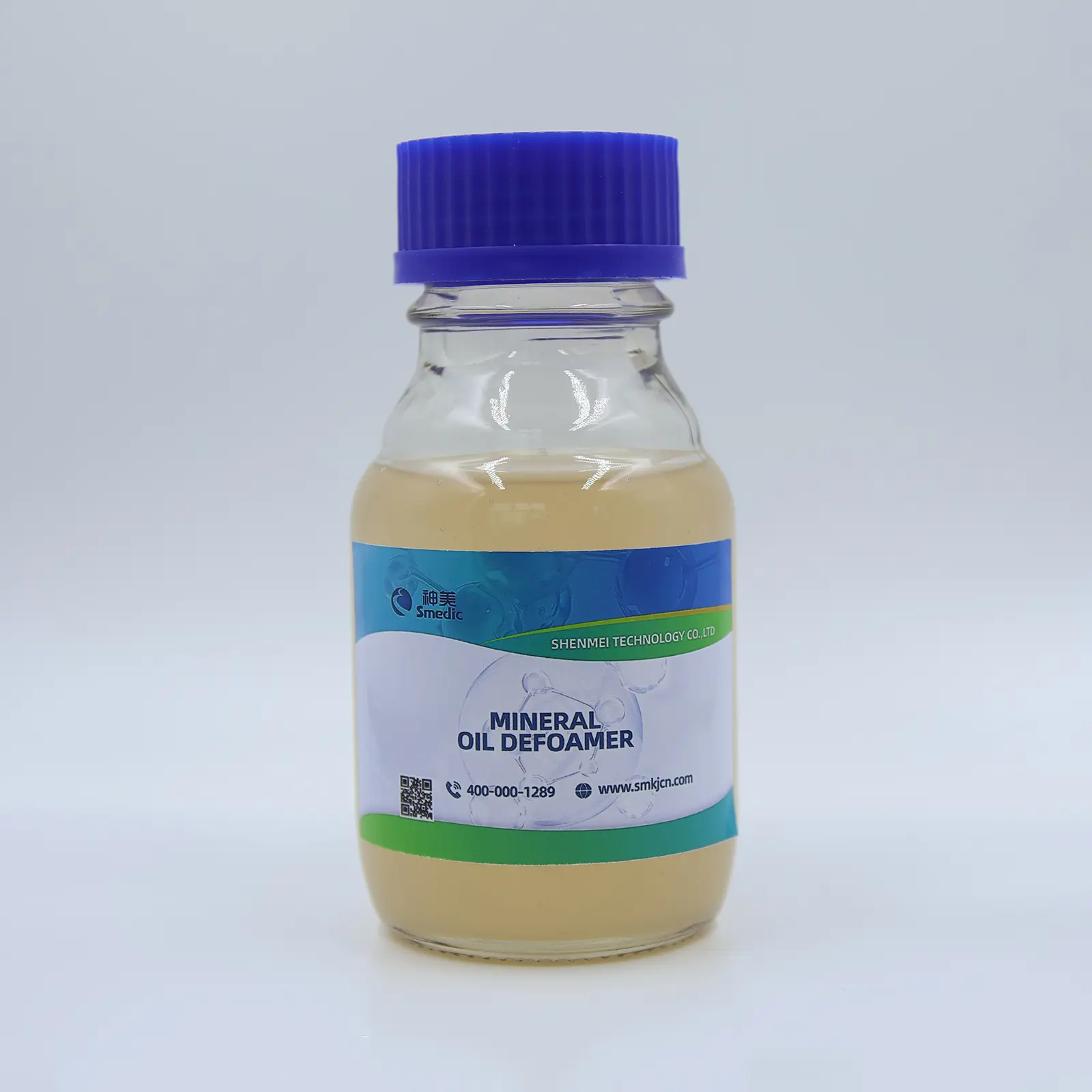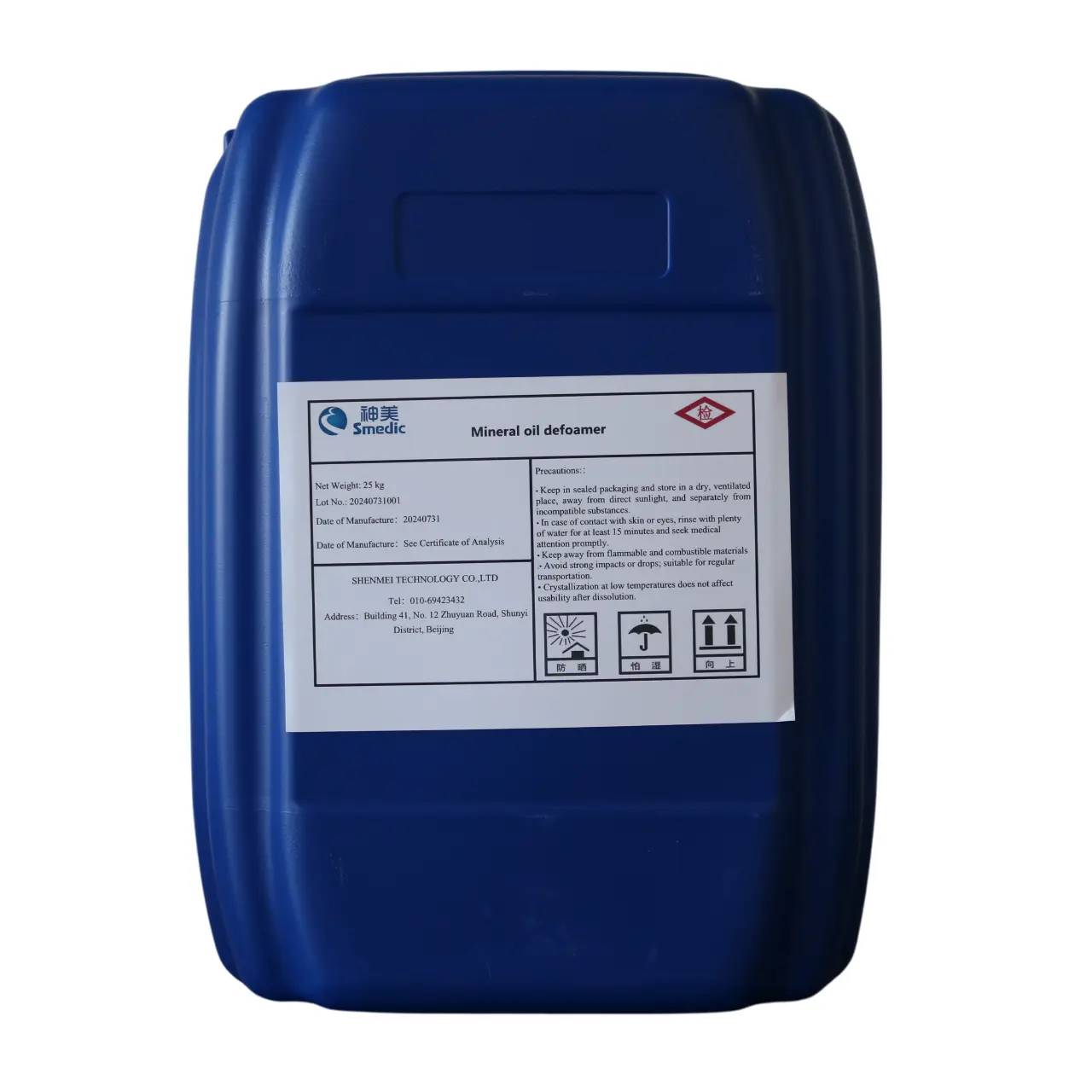
High-Quality Smedic Reliable Mineral Oil Defoamer Solution Suppliers, Exporter

Mineral oil defoamer, a highly effective oil-based defoamer, excels in applications like paints and coatings. Its typical formulation includes 85-95% selected mineral oil as the carrier, 1-3% active hydrophobic particles (e.g., silica or waxes), plus emulsifiers (APEO-free) and preservatives. Advanced versions may add modified polysiloxanes for enhanced foam knockdown.

Product Description

Product Description

Emulsifiers play a vital role within the mineral oil defoamer formulation, ensuring the hydrophobic particles disperse effectively in the oil defoamer base and facilitating the easy integration of these mineral oil antifoams into aqueous systems. The term mineral-oil-based antifoams is often used interchangeably, highlighting their function. As a leading oil-based defoaming agent, the mineral oil defoamer offers a reliable and often very cost-effective solution for foam control across various industries.

Specifications of Mineral Oil Defoamer
Appearance Solid Content (%) pH Viscosity (cps) Characteristics
Light Yellow Liquid 100% 5.5-7.0 500-1000 Water-based coating systems based on styrene-acrylic emulsion, silicone-acrylic emulsion, all-acrylic emulsion, acetoacetylated emulsion;
Light Yellow Liquid 100% 5.5-7.0 500-1000 Water-based coating systems based on styrene-acrylic emulsion, silicone-acrylic emulsion
Light Yellow Liquid 100% 5.5-7.0 500-1000 Emulsion type adhesive, latex paint and pressure sensitive adhesive
Light Yellow Liquid 20-50% 5.5-7.0 500-1000 Used for water based paint
Light Yellow Liquid 100% 5.5-7.0 500-1000 Water-based ink, high-grade interior latex paint

Product Features

Mineral oil defoamers, including various mineral-oil-based defoamers, offer significant advantages over other types, especially silicone-based products, in many applications like coatings. Choosing the right oil defoamer solution involves understanding these benefits:

Prevention of Surface Defects
A primary benefit of using a mineral oil defoamer is its superior ability to prevent surface defects like cratering and fisheyes in coatings. Unlike some alternatives, these oil-based defoamers integrate smoothly into the film, minimizing surface disruption and ensuring a high-quality finish.
Excellent Formulation Compatibility
Mineral-oil-based defoamers generally exhibit broad compatibility with diverse coating formulations. This ensures the oil-based defoaming agent functions effectively without negatively impacting other coating properties like gloss or adhesion. Good compatibility is crucial for consistent performance.
Cost-Effectiveness
Often, mineral oil defoamers provide a highly cost-effective approach to foam control. They deliver reliable performance, making them an economical and practical oil defoamer choice for managing production budgets without compromising quality.
Effective Foam Control
As effective mineral oil antifoams, these products efficiently suppress and break down foam during production and application. They achieve this reliable foam control typically without the side effects sometimes associated with other chemistries, such as recoatability issues, making mineral-oil-based antifoams a preferred choice for defect-free results.

Conclusion

In conclusion, the mineral oil defoamer presents compelling advantages, particularly where surface quality, formulation compatibility, and cost are paramount concerns. By preventing common defects, offering reliable compatibility, and being a cost-effective solution, mineral-oil-based defoamers (and related mineral oil antifoams) are an excellent choice for achieving high-quality results in coatings and many other applications requiring an effective oil-based defoaming agent.
Frequently Asked Questions (FAQ)

Q1: What is the main function of emulsifiers in mineral oil defoamers?
Emulsifiers ensure that the hydrophobic particles disperse effectively in the oil defoamer base, which helps the mineral oil antifoams integrate easily into various aqueous systems.
Q2: How do mineral-oil-based defoamers prevent surface defects?
Unlike other alternatives, mineral oil defoamers integrate smoothly into the coating film, minimizing surface disruptions and effectively preventing common defects like cratering and fisheyes.
Q3: Are mineral oil defoamers compatible with different coatings?
Yes, mineral-oil-based defoamers generally exhibit broad compatibility with diverse coating formulations, ensuring foam control without negatively affecting gloss, adhesion, or other application properties.
Q4: Why should we choose mineral oil defoamers instead of silicone-based alternatives?
They offer compelling advantages in compatibility, surface defect prevention, and cost-effectiveness, providing reliable foam control without issues like recoatability problems.
Q5: What systems are suitable for mineral oil defoamer applications?
They are highly suitable for water-based coating systems based on styrene-acrylic, silicone-acrylic, and all-acrylic emulsions, as well as emulsion-type adhesives, latex paints, water-based inks, and pressure-sensitive adhesives.
Q6: What are the standard specifications of a mineral oil defoamer?
Typically, it is a light yellow liquid with a solid content of 20-100%, a pH range of 5.5-7.0, and a viscosity of 500-1000 cps.

Related Products