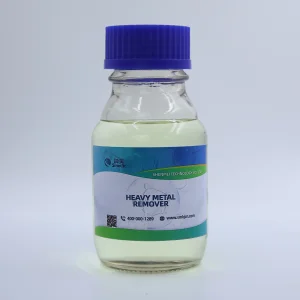
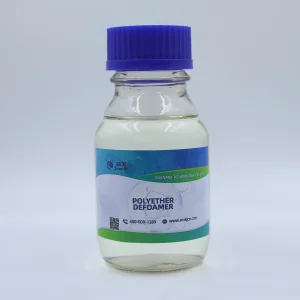
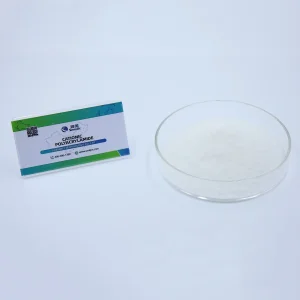
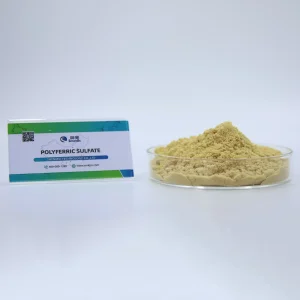
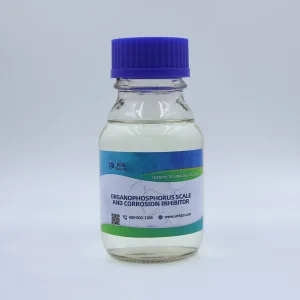
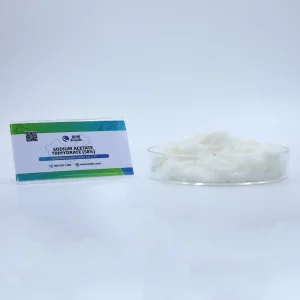
Direct access to our premium heavy metal removal and environmental agents engineered for municipal sewage and industrial installations within the Moscow region.
The Moscow metropolitan area, including the greater Moscow Oblast, represents the largest consumer of industrial wastewater chemicals in the Russian Federation. Key industrial zones such as Podolsk, Shchelkovo, Elektrostal, and Mytishchi host highly concentrated electroplating operations, heavy machinery manufacturing, automotive painting units, and chemical synthesis plants. Historically, these facilities discharge effluents containing elevated loads of toxic metals—primarily divalent cations such as Copper (Cu²⁺), Nickel (Ni²⁺), Chromium (both Cr³⁺ and carcinogenic Cr⁶⁺), Zinc (Zn²⁺), Lead (Pb²⁺), and Cadmium (Cd²⁺).
With the municipal government and Mosvodokanal continuously tightening wastewater reception limits into public sewer systems (strictly enforcing federal sanitary codes including SanPiN 2.1.3684-21), traditional precipitation methods are no longer sufficient. Industrial operations are legally mandated to limit heavy metal concentrations to fractional milligrams per liter (mg/L). This requires highly specialized organic and inorganic polymers that form insoluble cross-linked networks with metal complexes, bypassing the limitations of simple pH adjustment and hydroxide precipitation.
Smedic's advanced heavy metal precipitants target the robust organic-metal complexes (such as those stabilized by EDTA, NTA, or citric acid) common in plating bath rinses. By forming high-density macromolecular precipitates, our chemicals achieve effluent concentrations of less than 0.1 mg/L for Nickel and Copper, complying with stringent municipal regulations.
How our organic sulfur-based macromolecular polymers capture and isolate heavy metal ions from complex wastewater matrices.
At the molecular level, our agents are formulated with active dithiocarbamate and organic-sulfur functional groups. These groups possess strong coordination capabilities, donating electron pairs to form coordinate covalent bonds with heavy metal ions. This chelation process works even in the presence of strong competing chelating agents like ammonia or EDTA.
Once the metal-chelate complex is formed, the hydrophobic nature of the molecule facilitates rapid aggregation. Smedic's agents possess structured polymeric backbones that act as net traps, capturing micro-precipitates and converting them into dense, rapid-settling flocs. This significantly reduces sediment volume compared to traditional lime or sodium hydroxide treatment.
One of the major challenges for Moscow industrial plants is the disposal of hazardous sludge. Sludge generated via Smedic's heavy metal removal agent demonstrates high chemical stability. The bound metal ions do not easily leach back into the environment under acidic landfill conditions (satisfying TCLP leaching standards).
Established in 2011, Smedic Technology Co., Ltd. is a comprehensive environmental protection solution provider specializing in R&D, manufacture, and technical services for advanced water treatment chemicals. Headquartered in Beijing, we operate proprietary production bases in Hebei, Guizhou, and Shanxi, as well as over ten OEM partnerships and logistics facilities across China. With an annual capacity exceeding 1 million tons, Smedic serves municipal sewage treatment works, mining operations, oilfields, and heavy industrial clients worldwide.
Our products cover more than 80 variations, ranging from heavy metal removal agents to specialized defoamers, corrosion inhibitors, and high-performance polyacrylamides. By working closely with prestigious academic institutions, including Tsinghua University and Shandong University, Smedic stays at the forefront of chemical innovation, ensuring that our products meet the highest global standards for quality and environmental compliance.
Company founded; initialized specialized chemical production for industrial wastewater treatment.
Established Guiyang chemical manufacturing plant; expanded municipal and mining chemical portfolio.
Recognized as a National "Little Giant" enterprise for specialized environmental technologies.
Joint ventures formed for mineral processing reagents and global logistics expansion, targeting Eastern European and CIS industrial networks.
Our technical expertise is backed by rigorous scientific credentials, multiple patents, and national recognitions.
Smedic holds over 60 Chinese patents (including 40+ invention patents and 20+ utility patents) and has drafted over ten national and industry standards for chemical agents, including composite coagulants and sodium acetate. We have been awarded the status of a National High-tech Enterprise and a Specialized, Refined, Unique, and Innovative "Little Giant" Enterprise. Our independently developed "Inorganic-Organic Covalent Bond Flocculant" received the 22nd China Patent Award and the First Prize for Technological Invention from the China Petrochemical Industry Association.
To maintain this technical lead, our research framework includes one academy, three research institutes, and five production-experimental bases. We partner with the Tsinghua University Association of Senior Scientists and Technicians, and operate joint R&D laboratories with Shandong University and Beijing University of Technology. This scientific background guarantees that every batch of heavy metal removal agent shipped to Moscow meets consistent performance standards.
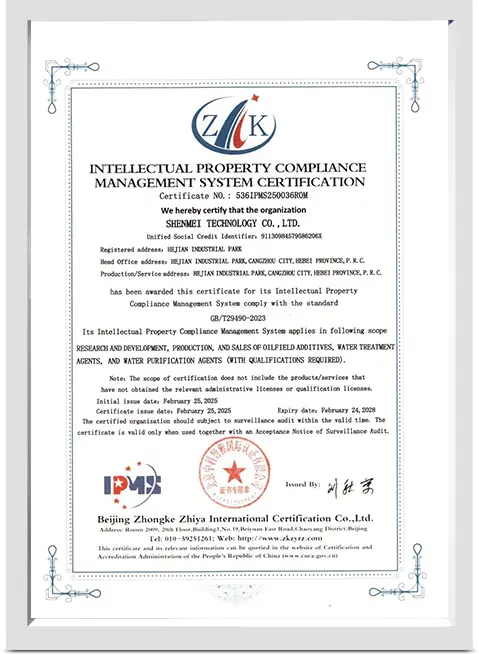
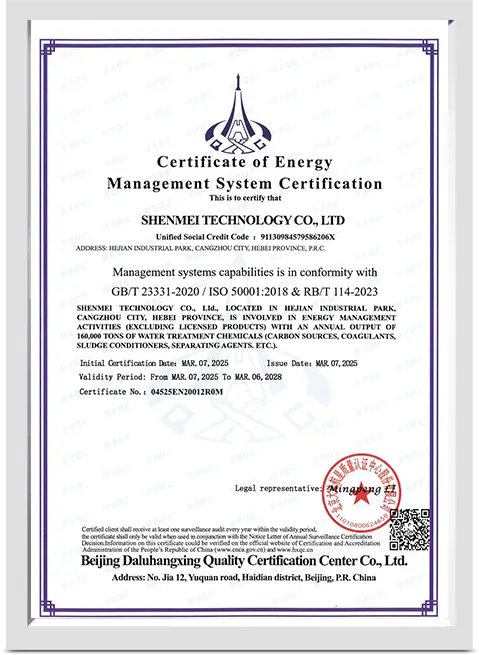
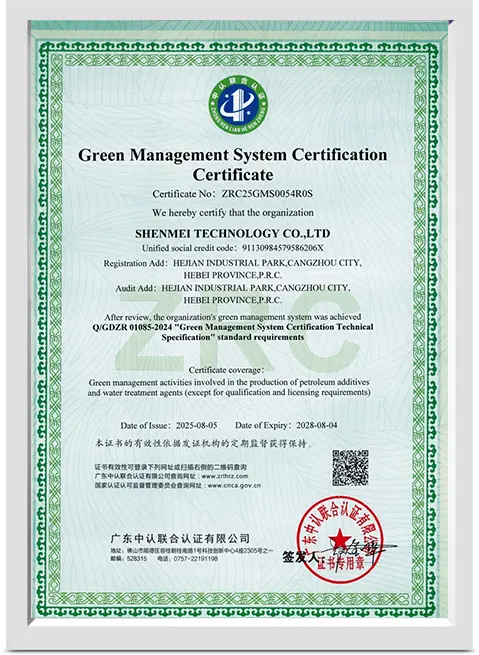
Our production processes are certified to ISO 9001, ISO 14001, and OHSAS 18001 standards, ensuring full international compliance and traceabilty.
By leveraging China-Europe block train freight corridors (routing from Xi'an/Chengdu via Manzhouli or Alashankou directly to the Moscow Vorsino / Bely Rast railway terminals), we guarantee transit times of 15 to 20 days. This avoids maritime delays and minimizes shipping costs.
To facilitate seamless transactions, we support flexible commercial terms and direct cross-border trade settlements in Chinese Yuan (RMB) and Rubles. This reduces currency exchange volatility and minimizes processing friction for Russian buyers.
We provide specialized, weather-resistant packaging designed for long-distance transport and sub-zero storage conditions. Options include 25kg PE/PP bags, 1000kg IBC totes, and bulk liquid flexitanks, all labeled with dual Chinese-Russian MSDS specifications.
Expert insights on chemistry, dosing, and operational implementation in cold-weather and complex wastewater conditions.
A1: Traditional hydroxide precipitation fails with complexed metals because ligands like EDTA hold the metal ions in solution. Smedic's agents utilize strong sulfur-based chelating polymers that have a higher affinity for transition metals than organic ligands. The agent displaces the ligand, forming a coordinate covalent bond with the metal ion and creating an insoluble precipitate that can be easily settled or filtered out.
A2: Unlike metal hydroxides which require precise and narrow pH ranges (often around 9.5 to 10.5 for nickel or zinc), Smedic's heavy metal removal agents are effective across a wider pH span, typically between 3.0 and 12.0. However, for optimum chemical efficiency and floc formation, a neutral to slightly alkaline pH of 7.0 to 9.0 is recommended.
A3: Low water temperatures can slow down chemical reaction rates and reduce settling velocities. Our liquid formulations are stabilized with thermodynamic anti-crystallization compounds to prevent freezing during storage down to -15°C. For winter operations, we recommend inline static mixers to ensure thorough dispersion of the agent, or utilizing our high-molecular-weight anionic polyacrylamide (APAM) as a co-flocculant to accelerate settling.
A4: Yes, all water treatment chemicals exported to the Russian Federation and Belarus are accompanied by standard Material Safety Data Sheets (MSDS) in Russian, technical data sheets, and certification documents demonstrating compliance with the customs union technical regulations. We provide chemical analyses and testing protocols to assist with local industrial environmental audits.
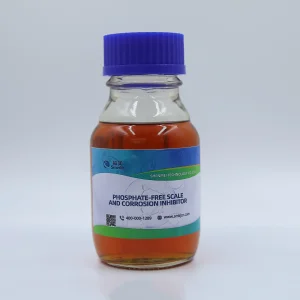
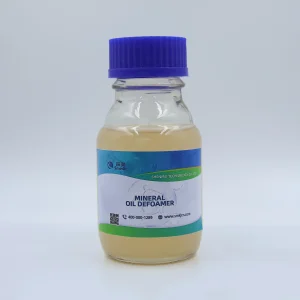
Explore our full portfolio of water purification and process additives, manufactured at scale and available for direct export to the Moscow industrial region.
 Smedic Tech