Advanced chemical agents optimized for Hanoi's rapid industrial park demands and rigorous wastewater discharge parameters.
Hanoi, the key economic engine of Northern Vietnam, is experiencing an unprecedented surge in industrial development. Leading industrial zones such as Thang Long Industrial Park, Sai Dong B, Quang Minh, and Noi Bai are home to world-class manufacturing plants spanning electronics, semiconductor packaging, automotive assembly, electroplating, and metal surface finishing. This massive industrial footprint brings a vital environmental mandate: the management of heavy metal concentrations in wastewater.
The regulatory authority in Vietnam has tightened control over water pollutants. The national environmental standard, QCVN 40:2011/BTNMT (National Technical Regulation on Industrial Wastewater), dictates strict limit thresholds for toxic heavy metals such as Nickel (Ni), Copper (Cu), Chromium (Cr), Lead (Pb), and Zinc (Zn). For manufacturers to maintain Class A discharge status, they must deploy robust, stable, and highly selective treatment technologies that can withstand operational fluctuations.
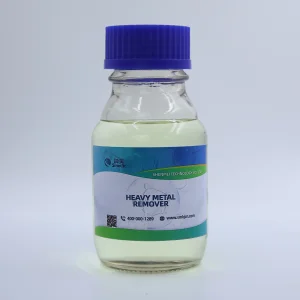
Smedic Technology delivers tailored industrial-grade chemical solutions to bridge the gap between heavy production demands and uncompromising ecological compliance. Our heavy metal chelating formulations are designed to handle complex wastewater streams containing complexing agents like EDTA, ammonia, or organic acids, typical of Hanoi's high-tech manufacturing outputs.
Why traditional precipitation methods fall short, and how Smedic's technology secures stable, low-ppm discharges.
Unlike traditional metal hydroxides that re-dissolve when pH shifts slightly out of the optimal 8.5–9.5 window, our organic polymeric chelators form highly stable organometallic coordination compounds active across a pH spectrum of 2.0 to 14.0.
Electronic and plating effluents in Hanoi contain high levels of citric acid, tartaric acid, and EDTA. Smedic’s agents break these strong complexes, grabbing metal ions with greater binding affinity to ensure complete precipitation.
Traditional treatment relies on heavy lime dosing, generating voluminous hazardous sludge that is expensive to haul and dispose of in Vietnam. Our macromolecular agents work at low dosages, generating dense, easy-to-filter sludge flakes.
| Performance Indicator | Smedic Organic Chelating Agents | Traditional Inorganic Precipitants (Lime/NaOH) | Sodium Sulfide (Na₂S) Methods |
|---|---|---|---|
| Discharge compliance (Ni²⁺, Cu²⁺) | Below 0.1 mg/L (Safely meets QCVN 40 Class A) | Often fluctuates above 1.0 mg/L | Variable; prone to colloidal suspension |
| pH Dependence | Minimal (effective from pH 3.0 to 12.0) | Highly sensitive (requires narrow pH window) | Requires precise monitoring to prevent toxic gas |
| Sludge Generation Volume | Very Low (dense, compact flocs) | Extremely High (heavy calcium/hydroxide sludge) | Moderate (fine sulfide precipitates) |
| Safety and EHS Profile | Non-toxic, safe for operator handling | Corrosive dust hazard | High risk of toxic, explosive H₂S gas release |
Established in 2011, Smedic Technology is a comprehensive solution provider specializing in environmental protection agents, integrating cutting-edge R&D, large-scale production, global sales, and engineering-related technical services. We are dedicated to providing global industrial and municipal clients with customized chemical products and technical consultation.
Smedic manufactures advanced water treatment agents covering multiple sectors, including municipal sewage treatment, industrial wastewater, tap water purification, mineral processing, and oilfield chemicals. With an annual production capacity exceeding 1 million tons across our network and a catalog of over 80 environmental protection products, we are positioned to support massive manufacturing networks reliably.
Our corporate headquarters is located in Beijing, with proprietary production bases in Hebei, Guizhou, and Shanxi, alongside ten OEM partner factories and regional warehousing bases in Shandong, Anhui, Guangxi, and Sichuan. This broad supply network ensures rapid shipping channels to neighboring markets like Hanoi, Vietnam via land border corridors (Lang Son / Lao Cai) or direct sea freight to Haiphong Port.
Serving over 600 municipal plants and 1,000+ major industrial clients globally.
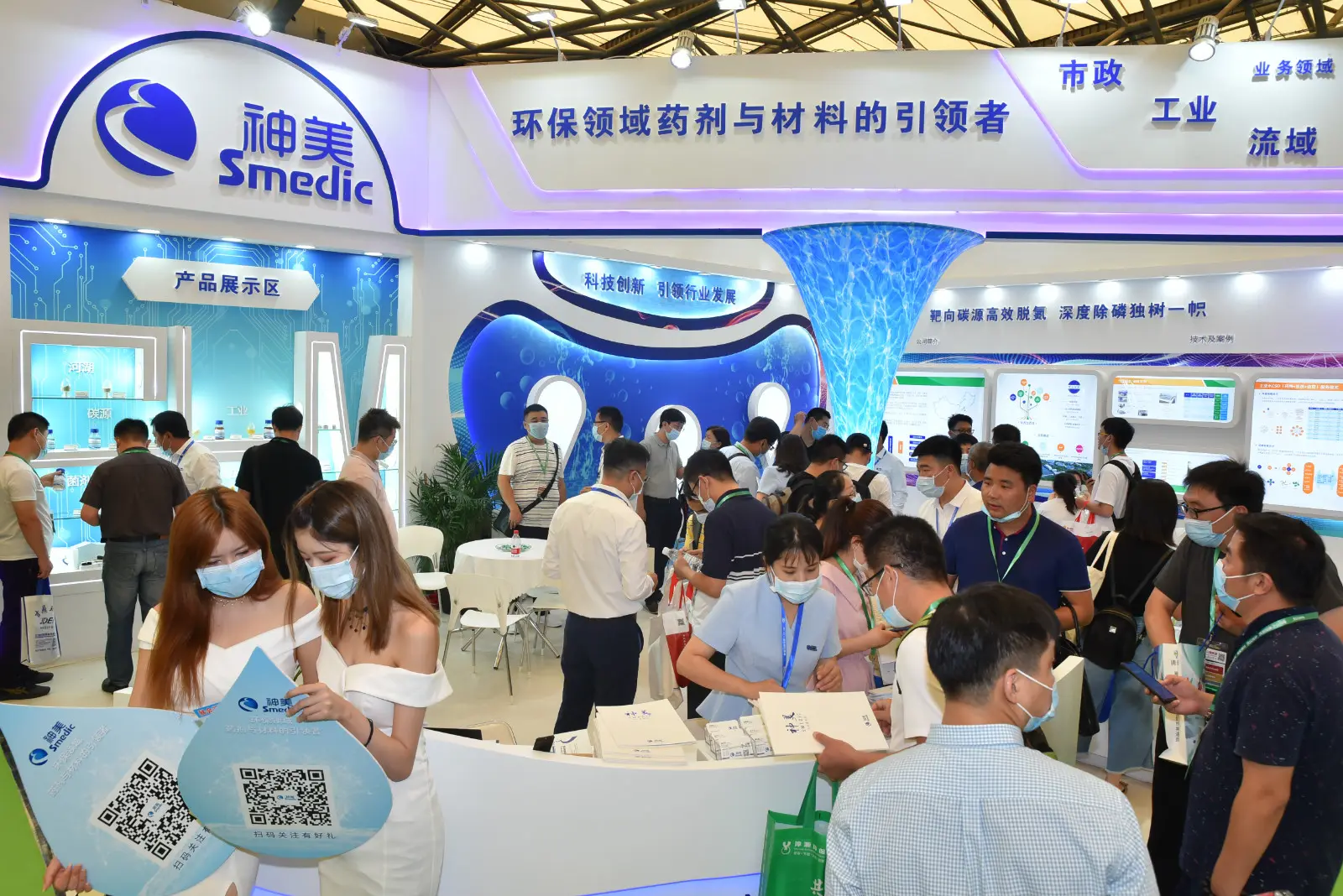
We are recognized as a National High-Tech Enterprise and a National Specialized, Refined, Unique and Innovative "Little Giant" Enterprise in China. Our commitment to industrial water purification chemistry is backed by an R&D framework composed of academicians, senior water chemistry experts, and engineering specialists, operating across one academy, three research institutes, and five production pilot bases.
Smedic holds over 60 registered patents (including more than 40 invention patents) and has drafted over 10 national and industry chemical standards. Our joint research laboratories with Tsinghua University, Shandong University, and Beijing University of Technology ensure that we remain at the forefront of macromolecular synthesis, molecular design, and surface chemistry.
Our independently developed "Inorganic-Organic Covalent Bond Flocculant" and "Deep Multi-Nuclear Phosphorus Removal Agent" have won the prestigious China Patent Award and the First Prize for Technological Invention from the China Petrochemical Industry Association. These technologies form the core of our heavy metal removal agents, ensuring high flocculation speed and trace-level heavy metal residue containment.
Accelerating compliance and reducing chemical overhead for multinational corporations in Hanoi.
Utilizing our strategic warehousing in Guangxi and Sichuan, we offer swift delivery times directly to Hanoi factories. Orders can reach the Vietnam border gates at Huu Nghi (Lang Son) or Kim Thanh (Lao Cai) within days, eliminating supply chain risks.
Wastewater characteristics vary across semiconductor packaging, electroplating, and chemical synthesis. Smedic provides free jar testing and laboratory optimization services for Hanoi plants, identifying exact dosage requirements.
Smedic products are formulated to prioritize environmental health and safety. Our heavy metal removal agents are biodegradable and free from hazardous sodium sulfide, reducing secondary toxicity risks for municipal discharge systems.
A structured approach for Hanoi engineers to implement Smedic heavy metal removal chemistry.
Determine total metal concentration, pH, and the presence of complexing substances (EDTA, organic compounds).
Perform titration tests to establish dosage curves. Identify the optimal coagulation pH and dosage of PAC/PFS/PAM.
Implement continuous dosing at a pilot scale to monitor precipitate stability and filter press performance.
Connect dosing pumps to online discharge sensors for automated feed-forward chemical adjustment.
Expert answers addressing the concerns of water engineers and procurement managers in Northern Vietnam.
Our agent contains abundant active dithiocarbamate (DTC) groups that exhibit a strong chelating capability. The complex constant of these organic functional groups with heavy metal ions is significantly higher than that of EDTA, ammonia, or organic acids. This allows our agent to successfully displace the complexing agents, selectively binding with target metals like Copper or Nickel to form highly stable, insoluble organometallic flocs.
Yes, our heavy metal removal agent works in synergy with standard coagulants (such as Polyaluminum Chloride - PAC) and flocculants (Polyamide - PAM). Generally, the chelating agent is dosed first to capture dissolved ions, followed by PAC to bridge micro-flocs, and finished with PAM to build large, shear-resistant flocs that settle rapidly in lamella clarifiers or are easily captured by sand filters.
Because our warehousing network spans key southern provinces in China (including Guangxi and Sichuan), we can arrange rapid cross-border road logistics via the Pingxiang/Lang Son border crossing, or sea freight routes to Haiphong Port. Standard transit to Hanoi industrial zones takes between 3 to 7 days, depending on customs clearance procedures.
The bonds formed between our macromolecular chelators and heavy metals are strong covalent coordinate bonds, which possess high thermodynamic stability. Leaching tests (such as TCLP) demonstrate that the precipitated sludge does not release captured metal ions even under acidic conditions (pH 3–4), ensuring safe landfilling or disposal compliance in Vietnam.
Explore Smedic's range of advanced coagulants, flocculants, and specialty agents for optimal plant operations.
 Smedic Tech